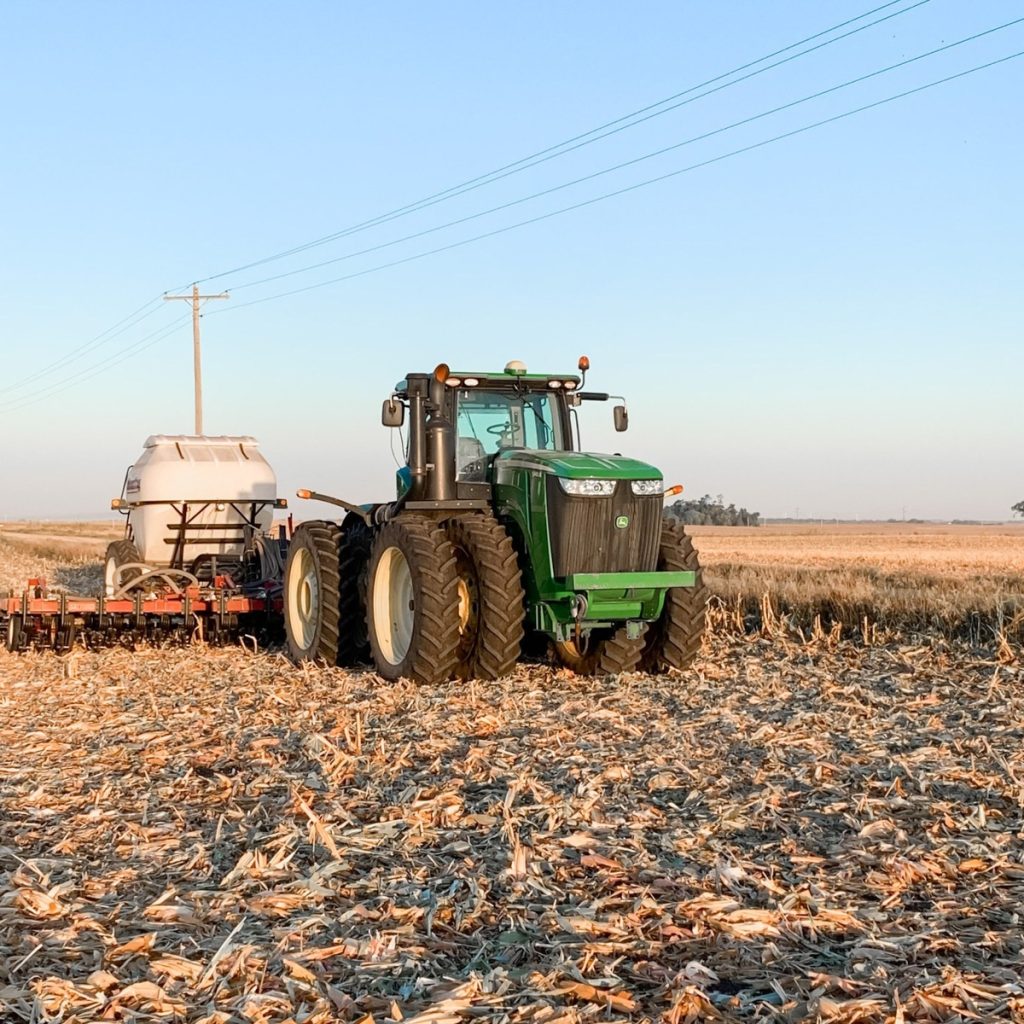
We’re digging into the different ways to plant your cover crops. From aerial seeding to broadcasting, we’ll break down the pros and cons of each planting method.

High-Clearance Application
Gliding high above the crop in a high-clearance applicator, also known as a ‘tall-boy’ or ‘high-boy.’ These machines, with about six feet of clearance, cruise over your crop while dispersing seed through nozzles sweeping through the rows.
If you’ve got access to this equipment, it’s a great way to get into the field before harvest. Being closer to the ground than a plane means better seed-to-soil contact. However, keep in mind that chronically wet field conditions can limit its use.
High Clearance Advantages
- Good soil to seed contact as seed is broadcasted closer to the ground
- Hits all corners of the field with higher accuracy
- Application prior to harvest to promote fall growth
High Clearance Drawbacks
- Specialized equipment that is not widely available – but gaining traction!
- Some minor crop damage may occur
- Field conditions such as significant rains or wind damaged crops may prevent application

Drone Application
Drone application continues to emerge as a viable option for planting cover crops. These machines can easily navigate tight spaces, avoid obstacles, and apply seed to fields that may be harder to reach with traditional equipment.
Drones also come with their own set of challenges, like limited seed capacity and slower coverage compared to planes or ground rigs. But if you’re looking for precision on a smaller field, drones could be the perfect fit for your operation!
Drone Advantages
- Application not impacted by poor field conditions
- Application prior to harvest to promote fall growth
- No crop damage and precise seed placement
- Good for unique shaped fields and areas with significant obstacles
Drone Drawbacks
- Not as efficient at covering a large volume of acres, battery life of a drone is limited
- Seed size matters – weight is restricted on drones, so bigger seeds= more refills
- Specialized equipment and requires a pilot with an FAA license
Ground Application
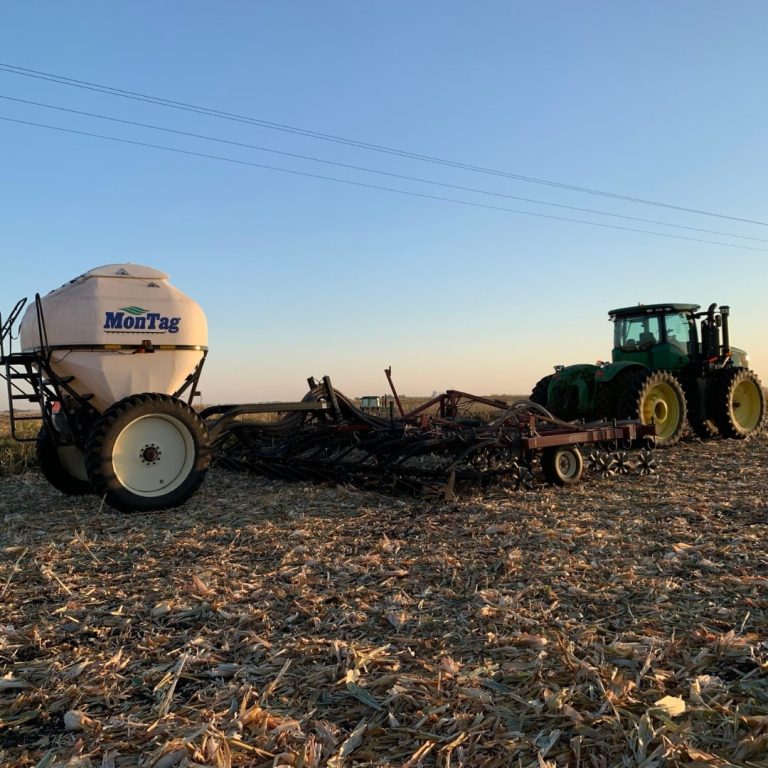
When it comes to planting cover crops, ground-based methods offer precision and the best seed to soil contact available. From drills and fertilizer spreaders to vertical tillage with air seeders, there are many ways to get the job done in the field.
Ground application should produce consistent stands with lower seeding rates, but they do require good field conditions and sufficient labor to get the job done.
Ground Advantages
- Produces excellent stand
- Consistent, precise, and uniform seed distribution
- Reduced seeding rates required
- Equipment is less specialized and generally widely available
Ground Drawbacks
- Seeding occurs after harvest potentially limiting fall growth
- Field conditions may ca use delays in planting
- Planting window competes with high labor periods on the farm
Plane Application
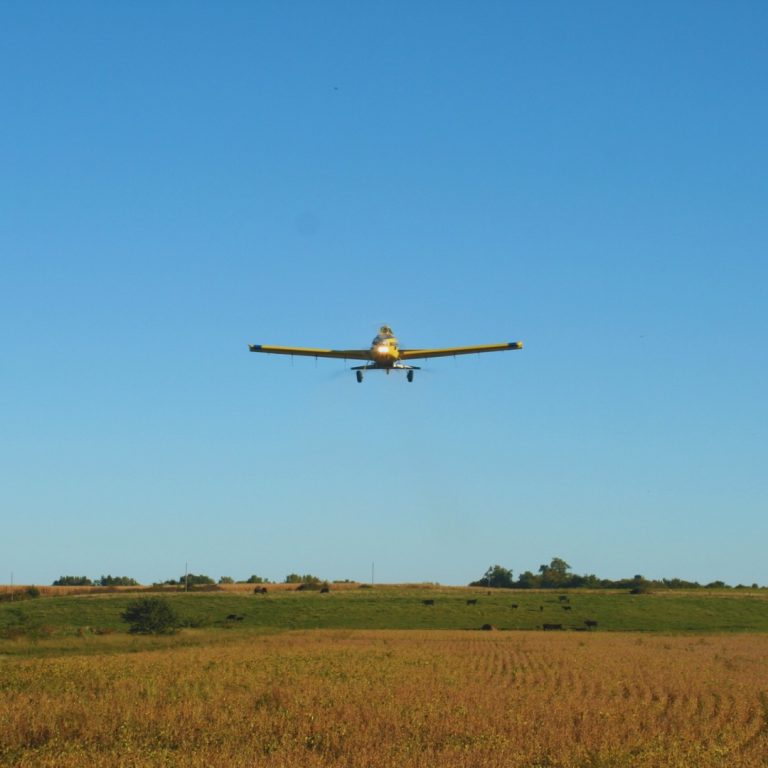
Planes can swoop to cover a lot of ground before harvest to kick-start fall growth. It does come with less direct seed-to-soil contact, which can lead to less consistent stands compared to ground application.
At Iowa Cover Crop, once your maps and seeding plans are shared, we take over the rest of the work. We’re lucky to work directly with some top-notch local pilots who help us get acres covered quickly and effectively.
Airplane Advantages
- High volume of acres can be covered in a short time frame
- Application not impacted by poor field conditions
- Application prior to harvest to promote fall growth
- No crop damage
Airplane Drawbacks
- Soil to seed contact may be less consistent and produce less consistent stand
- Seeding is not precise, so it’s harder to get corners and edges of field
- Application is limited by field obstacles (i.e. trees, windmills)